
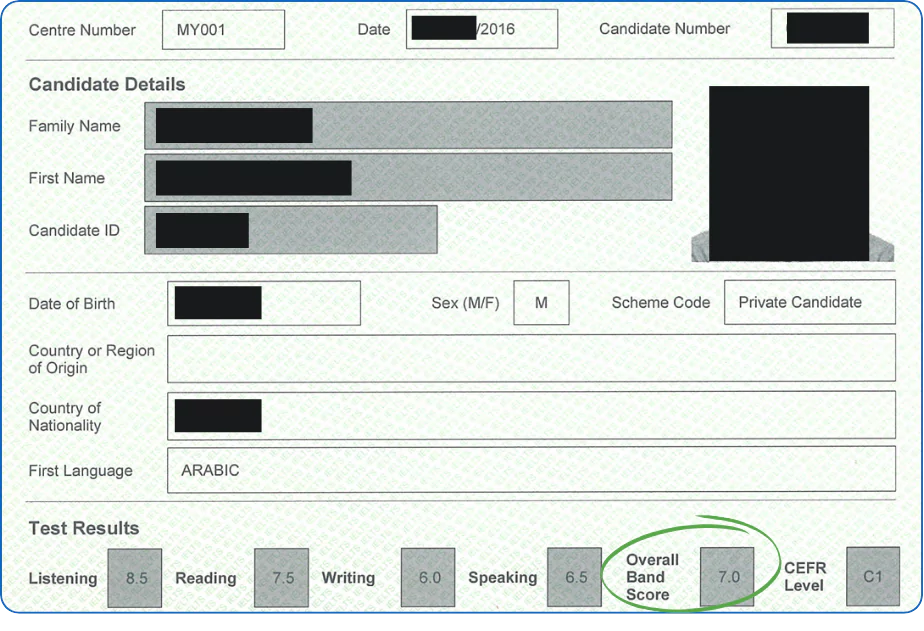
Building on our exploration of what the IELTS test is and a review of top English language institutes in Malaysia, this article shifts focus to a crucial topic for IELTS candidates and students: understanding the IELTS test’s sections and mastering IELTS preparation strategies. Drawing from my personal experience of achieving a band score of 7, I’ll share actionable insights and targeted tips to help you excel in every section and achieve your best results.
What Are the 4 IELTS Sections?
The IELTS test consists of four main sections, each designed to evaluate your language proficiency in different skills:
- Listening: Tests your ability to understand everyday and academic conversations.
- Reading: Assesses your comprehension skills through academic or general texts.
- Writing: Measures your capacity to express ideas and analyze information in written form.
- Speaking: Involves a direct conversation to evaluate fluency and pronunciation.
First: Preparing for the IELTS Listening Section
The IELTS listening section evaluates your ability to understand spoken English in various contexts. It tests your skills in understanding details, capturing main ideas, and interpreting opinions and attitudes in both everyday and academic conversations. This section emphasizes your ability to recall specific information from what you hear.
How the Listening Test Works
- Number of Recordings: The test includes 4 audio recordings of monologues and conversations.
- Duration: The total duration is 30 minutes, plus an additional 10 minutes to transfer your answers.
- Question Types:
- Multiple choice
- Fill in the blanks
- Matching information
- Total Questions: 40
How to Prepare and Study For IELTs Listening
- Daily Listening Practice: Consistently listen to spoken English through podcasts, everyday conversations, and radio programs such as BBC Radio.
- Regular Practice Tests: Use mock tests from the Cambridge IELTS series to familiarize yourself with the question styles.
- Explore practice tests on platforms like YouTube. For example, this is a great youtube channel for that.
- Analyze Your Mistakes: After each practice, categorize your errors (e.g., lack of focus, speed issues) to identify areas of improvement.
- Improve Concentration: Practice listening without subtitles or translations. Take notes as you listen to enhance focus and retention.
- Time Management Practice: Divide your time effectively between listening, understanding, and answering questions. Write down your answers while listening, and ensure you transfer them accurately to your answer sheet within the allocated time.
Second: How to Prepare for the IELTS Reading Section
The IELTS reading section challenges many test-takers because it requires focus, speed, and smart strategies to handle long, complex passages. Managing your time for each text plays a crucial role in achieving success.
You don’t need to read every passage word-for-word. Instead, you should follow smart strategies to locate answers quickly. Based on my experience, here’s how you can effectively tackle this section.
Understanding the Reading Texts
Types of Passages:
- For Academic IELTS: You will read long, detailed texts from books or scientific journals.
- For General IELTS: The passages will come from newspapers, advertisements, or general topics.
Question Types in the Reading Section:
You will encounter various types of questions, including:
- Matching Headings: Assigning the right heading to each paragraph.
- Short Answers: Writing a one-word or short-phrase response.
- Multiple Choice Questions: Choosing the correct answer from several options.
Tips to Improve Your Reading Skills
- Practice Regular Reading: Read articles from The Economist or Nature to improve your comprehension skills.
- Learn Fast Reading Techniques: Practice skimming for main ideas and scanning for specific details.
- Use Timed Practice: Train yourself to complete reading tasks within the time limit. Set a timer during every practice session.
- Expand Your Vocabulary: Focus on academic word lists like NGSL and NAWL. These lists help you recognize common words in the test. Use apps like Memrise to memorize them easily.
- Solve Mock Tests Daily: Practice with real tests, especially from the Cambridge IELTS series, to familiarize yourself with the test format.
- Analyze Your Mistakes: Identify whether your errors come from poor time management, misunderstanding questions, or missing keywords.
- Immerse Yourself in English: Read news articles and academic journals every day. This exposure will make the passages feel easier over time.
Strategies to Use During the Test
- Read Questions First: Before reading the text, look at the questions and highlight important keywords. This approach helps you focus on relevant sections of the passage.
- Tackle One Paragraph at a Time: Read one paragraph and immediately answer the questions related to it.
Skip Difficult Parts: - If a paragraph seems confusing, move on to the next and return later if time allows.
- You can watch this video to explore more effective strategies for tackling the IELTS reading section.

Third: The Writing Section in IELTS
The IELTS writing section includes two main tasks, each with a specific focus and time requirement:
- Task 1: Focuses on descriptive or analytical writing, such as describing a graph or a process.
- Task 2: Requires writing an essay that discusses a particular idea or opinion.
Key Differences Between Academic and General Writing
- Academic IELTS: In Task 1, you describe data, charts, or graphs.
- General IELTS: Task 1 involves writing a formal or informal letter related to a given situation.
Task 2 is the same for both types. However, in the academic version, you need to adopt a more formal tone and provide a detailed analysis of ideas.
Writing Task 1
- Time Limit: 20 minutes.
- Word Count: 150 words.
- Content: Write a description or analysis of a graph, process, or diagram.
- Important Tip: Avoid expressing your personal opinions. Focus on delivering an objective description using precise academic vocabulary. To excel in Task 1, build a strong list of descriptive words and phrases. Practice using them regularly in your writing to enhance your analytical and descriptive skills.
Writing Task 2 (Essay Writing)
- Time Limit: 40 minutes.
- Word Count: 250 words.
- Content: Write an essay discussing a specific idea or opinion. You need to present your argument and provide supporting examples in a structured way.
Tips for Preparing for the IELTS Writing Section
1. Write Daily
Practice writing an essay or a description every day to train yourself to meet the required time limits.
2. Use Educational Resources
- Visit IELTS Advantage for detailed writing strategies.
- Watch Eng Vid videos on YouTube for additional guidance.
3. Analyze and Categorize Your Mistakes
- Review your essays with a teacher or a peer.
- Categorize your mistakes (e.g., grammar issues, poor organization, or exceeding time limits).
4. Expand Your Academic Vocabulary
- Incorporate appropriate academic words and avoid repetition.
- Memorize descriptive terms such as “significant,” “proportion,” and “fluctuation” to use effectively in Task 1.
5. Study Predicted Writing Samples
Focus on understanding the structures commonly used in essays and descriptive writing.
Personal Tip:
What helped me most during my preparation was writing daily essays and getting continuous feedback from a qualified teacher. I categorized my mistakes and worked on improving my weaknesses gradually. This consistent effort significantly boosted my writing skills.

Fourth: The IELTS Speaking Section
The speaking section offers you the opportunity to demonstrate your fluency in English through a one-on-one interview with a certified examiner. This section assesses your pronunciation, fluency, and ability to express ideas clearly and in an organized manner.
The Structure and Nature of Speaking Questions
Introduction (Part 1)
- This part includes light, personal questions about your daily life, work, studies, or interests.
- Your answers should be 2-3 sentences long for each question.
- Avoid simple “yes” or “no” answers.
Individual Task (Part 2)
- The examiner gives you a card with a topic and key points to discuss.
- You have one minute to prepare before speaking for two minutes.
- Your response should follow a structure: an introduction, details, and a conclusion.
- Ensure your answer covers all points on the card.
- Use a variety of tenses accurately to showcase your language skills.
Discussion (Part 3)
- This part involves questions related to the topic you discussed in Part 2.
- Your answers should be well-organized with clear sections.
- They don’t need to be as long as Part 2 but should not be too short like Part 1.
- Common Topics in the Speaking Section
Examiners often ask about:
- Education
- Technology
- Environment
- Travel
- Social relationships
- Hobbies
How to Prepare for the IELTS Speaking Section
- Practice Daily: Speak with a partner, teacher, or record yourself answering common questions.
- Improve Pronunciation and Fluency: Use apps like IELTS Speaking App to analyze your performance.
- Handle Unexpected Questions: Train yourself to respond clearly and quickly to unpredictable questions.
- Analyze Your Performance: Record your answers and listen to identify mistakes in pronunciation and organization.
- Utilize Useful Resources: Watch YouTube channels like IELTS Energy TV and Eng Vid for practical tips to enhance your speaking skills.
Answers to Your Frequently Asked Questions
Although we have already discussed many aspects of the IELTS test sections and preparation strategies, it’s important to address some questions that students frequently ask.
What is the lowest score you can get in the IELTS test?
To begin with, the lowest score you can receive is 1. This score means that the candidate has an extremely limited ability to use English.
Can I improve my IELTS score if I retake the test?
Yes, absolutely! You can retake the test to achieve a higher score. However, before doing so, you must carefully analyze your previous performance. Then, focus on the sections where you struggled, and most importantly, stick to a well-structured preparation plan. By doing this, you can significantly improve your chances of success.
What are some common speaking questions in the IELTS test?
For instance, you might encounter questions like:
- Describe a person you admire.
- Talk about a city you want to visit and explain why.
- Discuss a hobby you enjoy.
- These questions are quite common. They allow you to demonstrate your ability to speak clearly, organize your ideas, and use varied vocabulary.
When is the best time to start preparing for IELTS?
Ideally, you should start preparing 3 to 4 months before your scheduled test date. During this period, make sure to allocate daily practice time for each section. Consistency, after all, is key to success.
Can I use a dictionary during the test?
No, unfortunately, dictionaries and any other aids are strictly prohibited. Therefore, it’s essential to build your vocabulary in advance and rely on your language skills during the test.
How can I manage my time during the test?
Time management is crucial. Here’s how you can handle each section:
- Listening: Always take notes while listening. Don’t wait for the recording to finish before writing down your answers.
- Reading: Divide your time evenly across the passages. Moreover, try reading the questions first to locate relevant information faster.
- Writing: Dedicate 20 minutes to Task 1 and 40 minutes to Task 2. This ensures you have enough time to complete both tasks.
- Speaking: Use the one-minute preparation time in Part 2 effectively to structure your response.
What are common mistakes IELTS candidates make?
Understanding common errors can help you avoid them. For example:
- Writing: Candidates often repeat ideas or choose words that don’t fit the context.
- Speaking: Many stop speaking after making a mistake instead of confidently continuing.
- Listening: Focusing too much on individual words instead of grasping the main idea.
- Reading: Spending too much time on a single question can lead to incomplete answers.
That’s All Folks!
I am delighted for this opportunity to share my personal experience, and I hope it serves as a valuable guide in your IELTS preparation.
Remember, success comes from consistent effort, learning from mistakes, and staying committed to your goals. I wish you all the best in your journey!